Barcelona & Madrid in 8 Days: Highlights from Our 2025 Rick Steves Tour
Dave, Liz and Gen Run, Ruck and TOUR Spain
Dave's STEPS (walk, ruck, run):
June 5 - 8,875 (travel from BCN day)
June 6 - 12,412
June 7 - 19,548
Moving on foot revealed layers of each city that structured touring alone could not.
Tarragona
We arrived in Barcelona at 10:30am, 2 days before the start of the Rick Steves tour to acclimate and spend time in a Spanish town off the usual itinerary. At the airport we took a pre-reserved private transfer (cab) to Tarragona where we spent two nights at the BB Centro Urbis Hotel, right across from the Central Market. Here is a view of the Central Market and the Plaza de Corsini from the hotel. We loved how the Plaza was everything for everyone, ...kids playing soccer and talking with a policeman, diners eating under tents, people strolling and chatting... We were too jet lagged to run so we walked.

The Archaeological Ensemble of Tarraco in Tarragona, Spain, is a UNESCO World Heritage site (since 2000) featuring significant, well-preserved ruins of the ancient Roman provincial capital. Key sites include a second century amphitheater, a Roman circus, city walls, a forum, and an aqueduct, representing vital Roman urban planning. Our favorite as the aqueduct.
We were surprised to find that Tarragona is not even included in the Rick Steves "Spain" guide. Mr. Steves we'd love to show you around Tarragona so you can add it to your next guide book! ;)

While we loved every place in Spain we visited, Tarragona was probably our favorite city. It is a city of about 100,000 people, not at all touristy and a UNESCO world heritage site. In Tarragona we toured Roman ruins, the Ampitheater, circus, wall and aqueduct. Carmen was our tour guide for this and the Cathedral and museums. The second day we had one of my favorite meals at Arcs restaurant, inside a building with Roman Arches. I had the “Baby goat cooked at low temperature with fresh figs and old wine” and a mushroom appetizer. My go to drink in Spain turned out to be Agua con gas on ice, since it was quite hot. I also tried sangria, cava and cana. Apparently, pigs that eat exclusively acorns in the mountains make the best jamon. We tried it and it was good.


The streets and cathedral were magnificent.


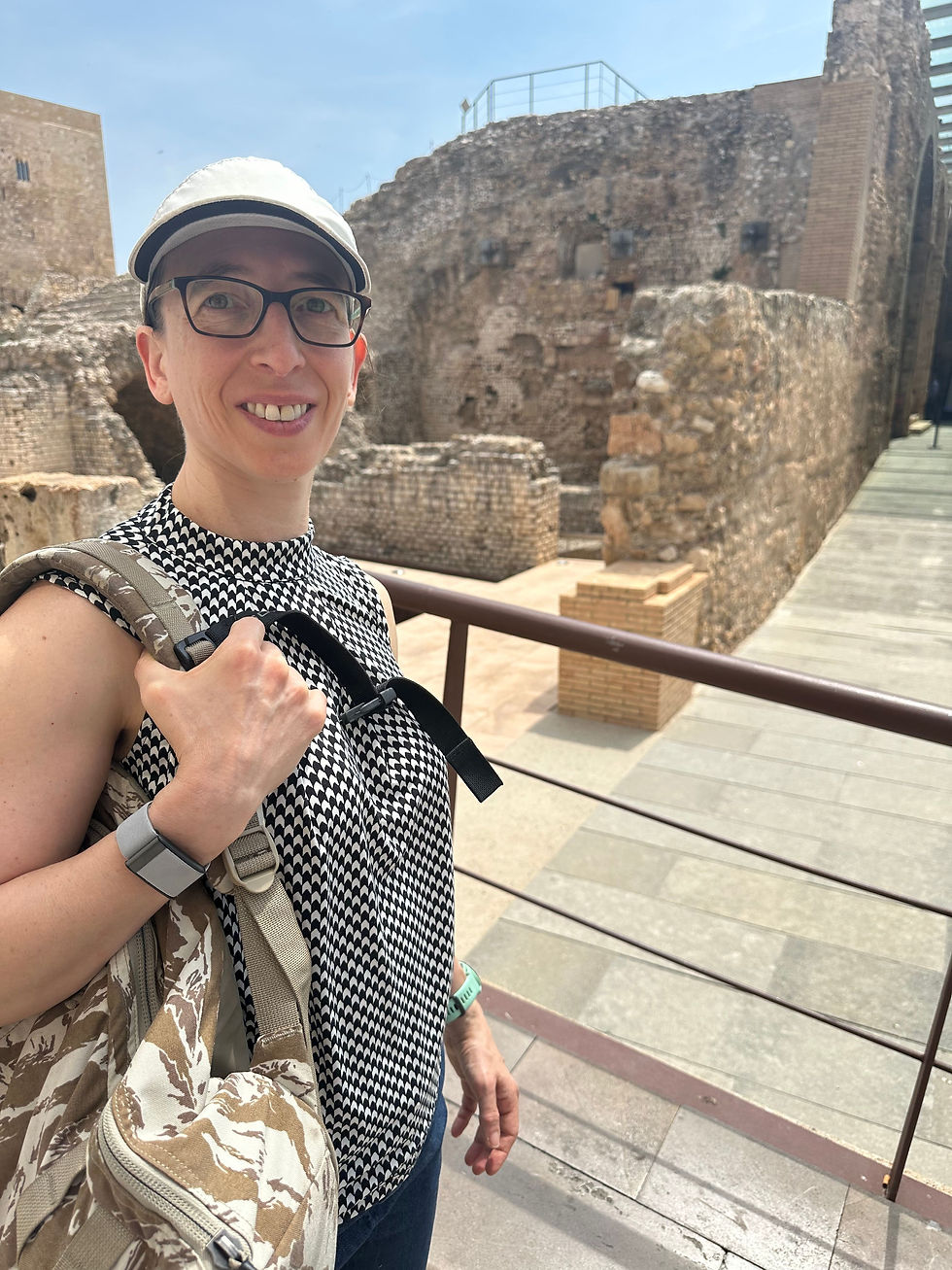


The Roman remnants were quite well preserved.


Tarragona is not crowded. It is vibrant and historic.


Below is a long range view of the amphitheater and Mediterranean. Spectacular.


The famous pastry in Tarragona is the olive bread (bottom right).


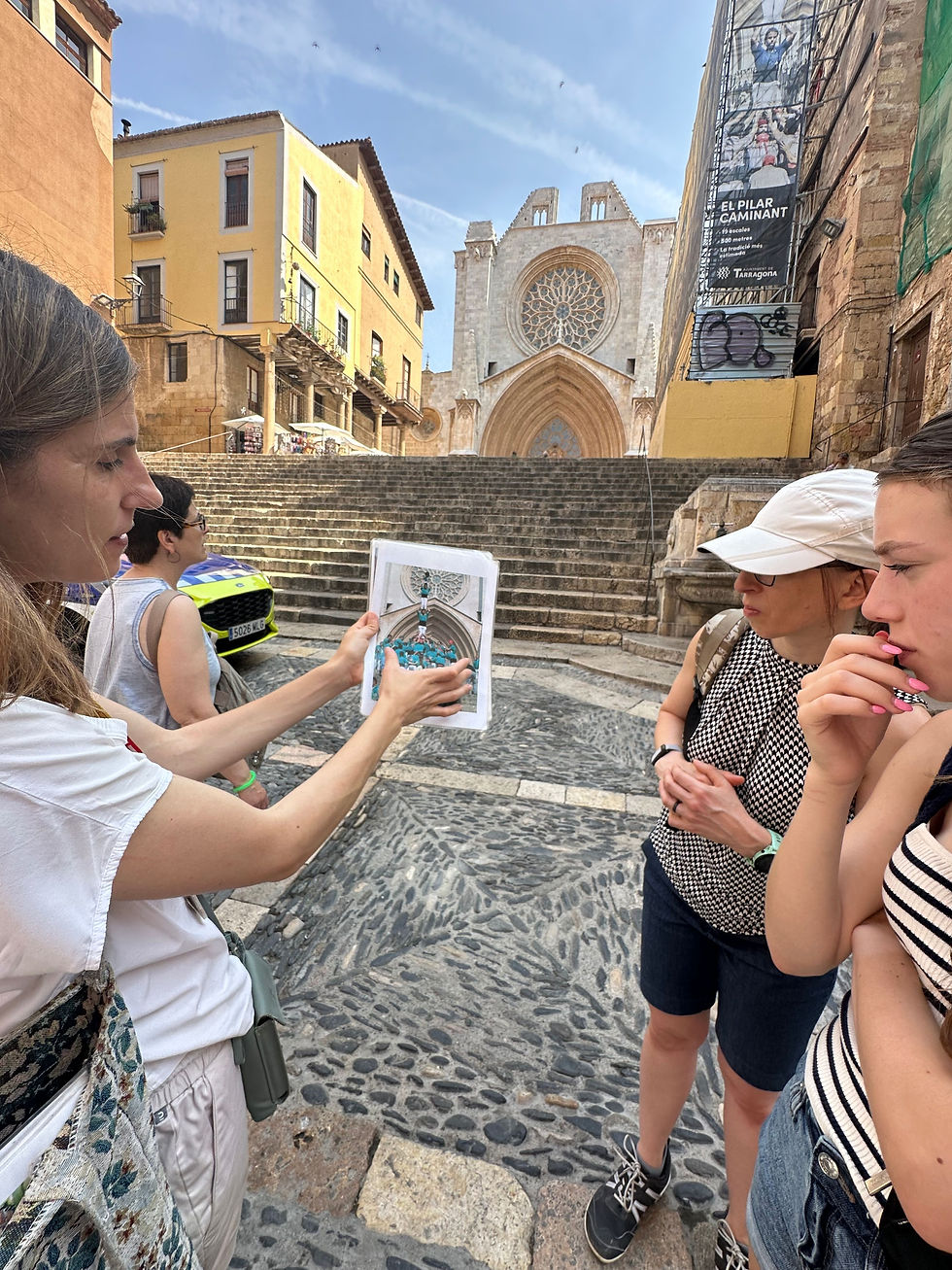

Our tour guide Carmen describing the human towers Tarragona is famous for.
The next day we boarded a train to Barcelona.
The journey began independently, before the tour schedule and before the headsets. Tarragona offered a quiet entry into Spain, Roman stone overlooking the Mediterranean, sea air moving through ancient ruins.